Blog Post #2 For MCO 427
For this Blog post I will be discussing tools that help people understand how and why misinformation get spread, and what to watch out for.
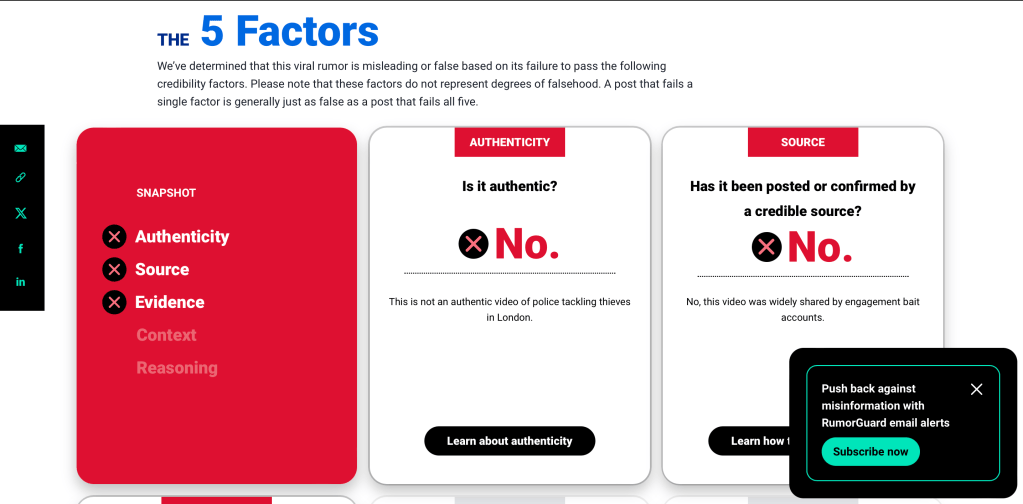
The first educational tool I explored was the News Literacy Project’s RumorGuard, which is designed to help people recognize and evaluate misinformation that they may encounter online. The tool uses examples of real viral claims and informs users through the process of determining whether the information should be trusted or not. Rather than telling users if the information is true or false, the tool explains the evidence and reasoning used to evaluate the claim.
RumorGuard breaks it down on what to look for when determining if the information is true or false by teaching these factors: source, evidence, context, reasoning, and authenticity of information. These can help people slow down and think thoroughly before believing or sharing something online. This is especially important on social media, where information can spread extremely fast without being verified.
I think RumorGuard is an effective educational tool because it focuses on real world examples. It is hard to just read about misinformation and what it can contain without seeing legit rumors, so I think it definitely helps when explaining what to look for.
One potential weakness is that users are guided through the evaluation process, which they won’t always have and will have to eventually think for themselves. However, I still think RumorGuard is useful because it can provide people with skills they can apply outside of the activity. Overall, it encourages users to question information, pay attention to sources, and look for evidence before immediately believing or sharing something they see on the Internet or elsewhere.
After playing through a few educational games, my favorite one was Harmony Square, so I chose to write more about that one. I liked it best because it takes a very different approach to teaching people about misinformation. Rather than asking the player to identify false information, the game puts the player in the position of someone attempting to manipulate information and gain influence. Throughout the game, I learned about tactics that can be used to spread misinformation, including creating emotional reactions, encouraging division, and using misleading information to gain attention.
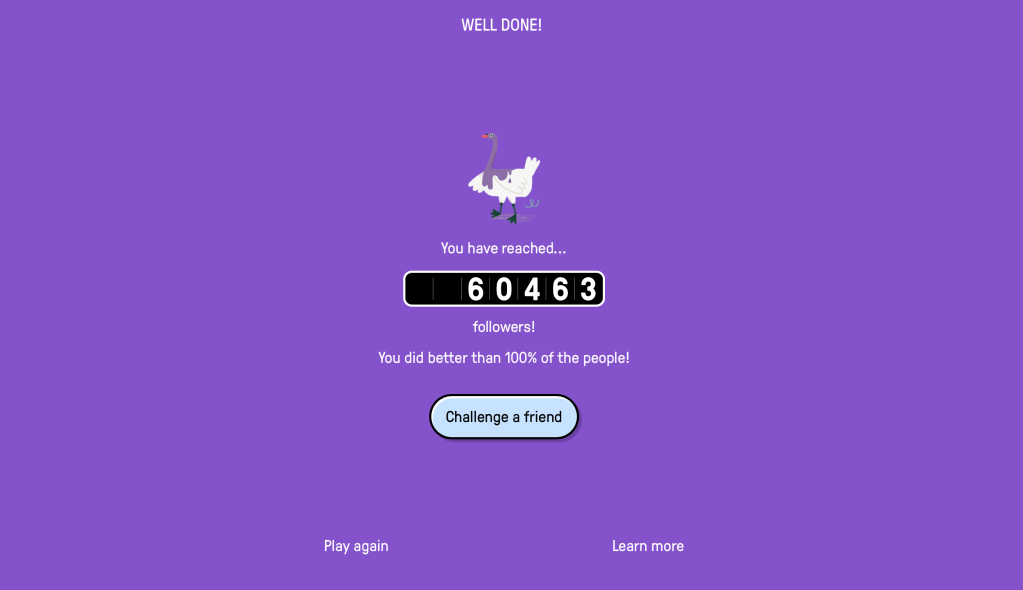
While playing the game, you make choices based on how they will influence the fictional community of Harmony Square. The goal is to gain followers and create as much disruption as possible. My final results showed that I reached 60,463 followers, which demonstrated how quickly someone can gain attention when using manipulative tactics online.
I found this game particularly effective because it allowed me to actively experience how misinformation strategies work, along with the adrenaline rush of gaining more followers. Instead of reading about the techniques, I had to make decisions and experience the results of the decisions. I think the game thoroughly allowed me to feel like I was on the other side and helped me understand how and why misinformation can get spread so easily.
Overall, I think educational games and interactive tools can be very helpful for navigating through misinformation. They make learning more engaging and require participants to actively think rather than just reading about it. While, I don’t think anything will ever eliminate misinformation completely, I believe games like this can help people further understand and potentially reduce it.


Leave a Reply